
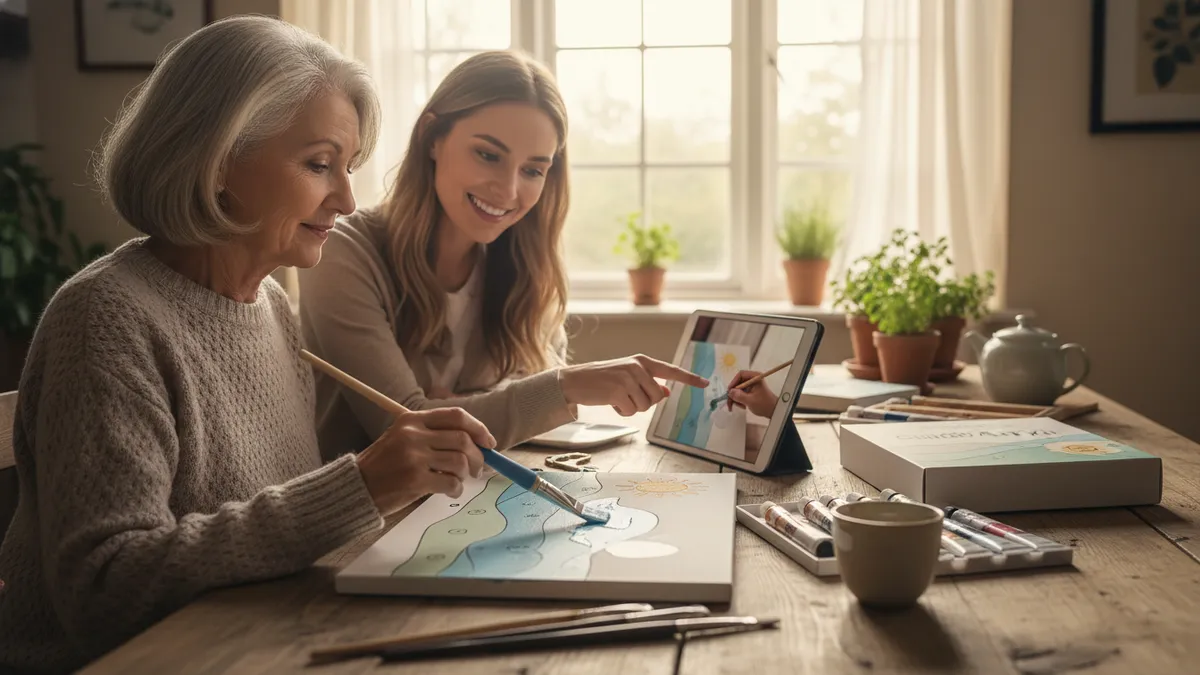
Why You Don’t Need to Be Creative to Use an Art Box
Do you need art experience to use a therapeutic art box? No. Therapist-designed art kits like Artful Connections require no art experience, no creative…

Contents
Do you need art experience to use a therapeutic art box?
No. Therapist-designed art kits like Artful Connections require no art experience, no creative talent, and no prior skill. They include guided templates with gentle outlines, step-by-step video instruction, and pre-selected materials — so you simply pick up a brush and follow along. The goal is connection and enjoyment, not creating a masterpiece.
“I’m not creative.”
“I can’t even draw a stick figure.”
“Mum would never do that, she’s not artistic.”
If any of these sound familiar, this post is for you. Because the number one reason people hesitate to try a creative kit with their parent isn’t cost, or time, or logistics. It’s the belief that they’re “not the creative type.” Here’s why that doesn’t matter.
Why do people think they need to be creative to paint?
The belief that you need talent to paint comes from confusing art-as-product with art-as-process. In a therapeutic context, the value is in the doing, the sensory experience, the conversation, the shared focus, not in the finished result.
Somewhere around high school, most of us decided we were either “creative” or “not.” That label sticks for decades. But it’s based on a misunderstanding, the idea that art is about producing something good.
In the context of guided creative engagement, art is about the process. It’s about what happens while you’re painting, the conversation, the focus, the sensory experience, the laughter when someone accidentally mixes the wrong colours. The finished painting is a bonus, not the point.
How do guided templates remove the blank-page problem?
Guided templates provide gentle outlines on the page, so you never face a blank canvas. You simply choose a colour, pick up a brush, and fill in the shapes. This removes the most intimidating moment in any creative activity, the question of “where do I start?”
The blank page is terrifying. It’s terrifying for professional artists and it’s terrifying for your mum. Artful Connections boxes eliminate it entirely.
Each kit includes three A4 templates designed by Debra Shapiro, a qualified art therapist, with gentle outlines that give you a starting point. You’re not inventing, you’re responding. Fill in this shape. Choose a colour for this area. Add some detail here if you feel like it. The template does the thinking so you can focus on the doing.
What if my parent has limited mobility or shaky hands?
Therapist-designed art kits account for reduced mobility. Artful Connections includes large-grip brushes and templates with forgiving shapes that look beautiful regardless of precision. Acrylic paint is also forgiving; you can paint over any stroke you’re not happy with.
Deb has spent three years running weekly creative sessions in aged-care facilities. She designs every template knowing that some of the people using it will have arthritis, tremor, or limited grip strength. The brushes are sized for comfort. The shapes are generous. And acrylic paint is wonderfully forgiving, if a line goes somewhere unexpected, you just paint over it.
The result is that every finished piece looks genuinely beautiful, regardless of the maker’s skill level. That’s not an accident, it’s by design.
What does the video guidance actually look like?
Deb’s video guidance is not a YouTube tutorial. It’s not fast, it’s not flashy, and it doesn’t assume you know anything.
She walks through every step at a gentle pace, showing you exactly what to do with each brush, each colour, each template area. You can pause, rewind, and take as long as you like. The videos are designed so you can prop up a phone or tablet between you and work through the project together.
Most people are surprised how quickly they forget about “not being creative” once they’re ten minutes in. The guidance removes the anxiety, and what’s left is just… enjoyment.
Is therapeutic art the same as art therapy?
No. Art therapy is a clinical practice delivered by a qualified art therapist in a professional therapeutic relationship.
Therapeutic art, or therapist-designed creative engagement, uses principles from art therapy to create beneficial experiences but does not require a therapist to be present. Artful Connections kits are therapist-designed for home use and are not a substitute for clinical art therapy.
This is an important distinction. Debra Shapiro is a qualified art therapist, and she’s designed every Artful Connections kit using principles from her art therapy training. But when you open a box at your kitchen table, you’re not doing art therapy, you’re doing guided creative engagement, designed by a therapist to be beneficial, accessible, and enjoyable.
The kits bring the benefits of structured creative activity into the home without needing a therapist in the room. That’s the whole point.
What do people actually say after using a kit?
The most common reaction Deb hears is: “I didn’t think I could do that.”
The second most common: “Mum / Dad hasn’t talked that much in months.”
When people say they’re not creative, what they usually mean is they’re afraid of getting it wrong. Artful Connections is designed so that you can’t get it wrong. Every colour combination works. Every template shape is forgiving. Every finished piece goes on the fridge or in the Memory Book. And the conversation that happens while you’re painting? That’s the real outcome.
Frequently Asked Questions
Can someone with no art experience use an Artful Connections kit? Yes. The kits are specifically designed for people with no art background. Guided templates, step-by-step video guidance, and pre-selected materials mean you simply follow along. Debra Shapiro designed them based on her experience running sessions with seniors who had never painted before.
What if my parent says they don’t want to do it?
This is common and usually comes from fear, not disinterest. The best approach is to set up the kit yourself, start painting, and invite them to join you. Most people are curious once they see the materials out. The conversation cards can also ease them in before any painting begins.
Are the kits suitable for someone with arthritis or hand tremor?
Yes. The brushes are sized for comfortable grip, and the template shapes are intentionally forgiving. Acrylic paint can be painted over easily, so there’s no pressure for precision.
What’s the difference between an art box and art therapy?
An art kit is a product you use at home for creative engagement. Art therapy is a clinical service delivered by a qualified art therapist in a therapeutic relationship. Artful Connections kits are therapist-designed and informed by art therapy principles, but they are not art therapy.
Can I use NDIS funding to buy a kit?
Artful Connections is not a registered NDIS provider. Self-managed and plan-managed participants can purchase our products using their NDIS funding.